
Food & water / Blog & insights
Make a water plan before you need one
Work out how much to store, where to keep it and what to do when officials say tap water is unsafe.
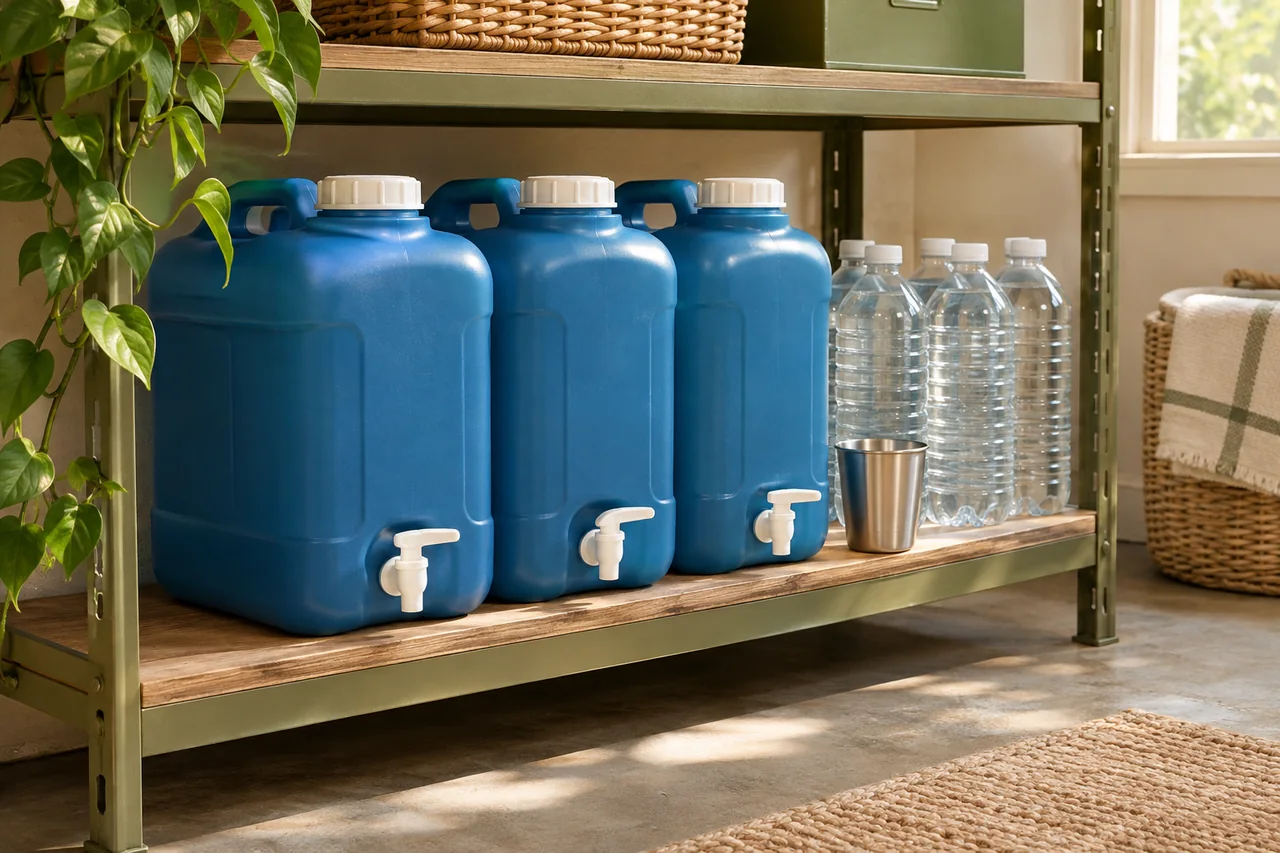
Write down a household starting quantity
CDC recommends at least one gallon per person per day for three days and suggests a two-week supply when possible. Four people therefore start at 12 gallons for three days, before allowing for pets, hot weather or other individual needs. List drinking, food preparation and hygiene needs so the water reserve matches the food and household plan you are building. [1]
Store it where you can find and manage it
Unopened commercially bottled water is CDC's most reliable emergency option. For water you store yourself, use suitable food-grade containers, follow CDC's cleaning and sanitizing directions, label the storage date and replace it every six months. Avoid containers that previously held toxic chemicals. Choose sizes your household can lift and pour; then write the storage location into your outage plan. [1]
Know which official instructions to follow
Save your water utility and local health department contact details. A boil-water notice and a warning about chemical contamination require different responses. CDC says boiling or disinfecting does not make water containing fuel or toxic chemicals safe. Use bottled water or another safe source and follow the health department's instructions in that situation. Do not assume that clear-looking water or a familiar taste establishes safety. [2]
Keep treatment instructions with the supplies
For cloudy water, follow CDC's settling or prefiltering step before boiling. If officials recommend boiling and you lack safe bottled water, CDC directs a rolling boil for one minute, or three minutes above 6,500 feet, followed by cooling and covered storage in a clean, sanitized container. If chemical treatment is needed, use the complete CDC or EPA directions for the specific product and concentration. Save the official instructions offline; a generic number of drops is not a substitute for identifying the product. [2] [3]
Practice the ordinary parts now
Check that everyone who may need the water can locate it, open the container and pour it without contaminating the contents. Keep a written inventory and a reminder for the next review. Match your reserve to your pantry meals, then record when you would leave home if safe water became unavailable. Water planning works best alongside your wider household outage plan.
Sources & further reading
Information reviewed November 10, 2026. Follow the linked primary sources for complete guidance and updates.
- Create and store an emergency water supplyCDC
- Make water safe in an emergencyCDC
- Emergency disinfection of drinking waterU.S. Environmental Protection Agency
Follow current utility and health-department notices. This overview does not replace the complete treatment instructions or establish that any particular filter removes a contaminant.