
Food preservation / Blog & insights
Learn to can food: a safe place to start
A practical learning path for your first batch, from choosing a tested recipe to finding a local class.
Start with a food you already use
Pick one food you already eat. If your household uses applesauce, start with the tested applesauce procedure. Notice how the directions separate the jar sizes, canner types and elevation ranges. Choose one method and read it from start to finish before you buy anything. Keep the written procedure beside you as you work.
Match the method to the food
Low-acid foods, including meats and most vegetables, need pressure canning using a tested process. A boiling-water bath is not a safe substitute. Foods suitable for water-bath canning still need the correct recipe and processing directions. Tomatoes can require added acid; do not assume that a tomato mixture is automatically safe for water-bath processing. The National Center explains how acidity determines the method. [1]
Build your shopping list from the recipe
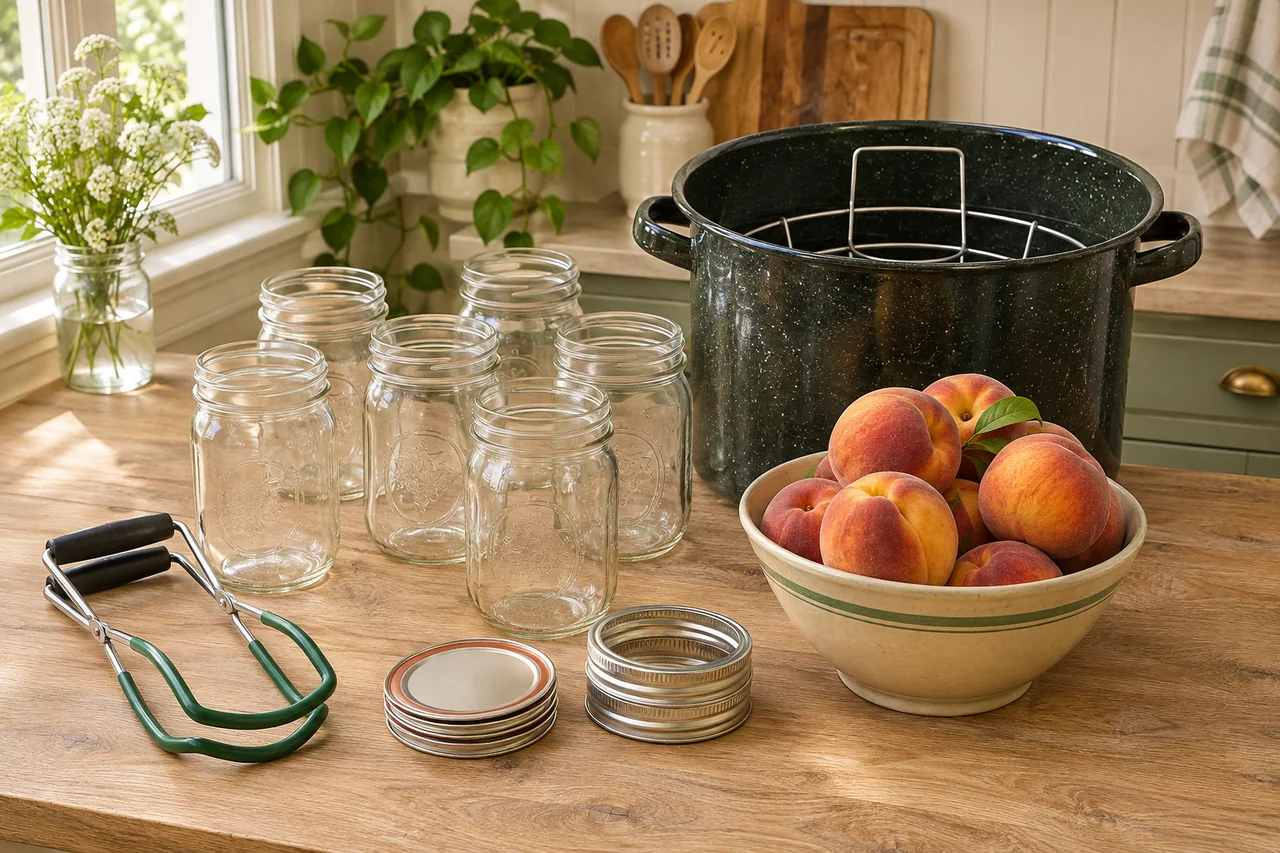
Write down the canner, jar size, lids and ingredients the recipe calls for. Add a jar lifter and make sure the canner works with your stove. When the recipe calls for pressure canning, use the type of pressure canner it specifies. A small pressure cooker or an electric multicooker with a canning button is not a substitute for the canner used to test USDA pressure processes. [4]
Make a first-batch checklist
Before you start, identify your elevation, jar size, packing method (hot or raw), headspace (the gap above the food) and the matching processing instructions. The time or pressure can change with elevation. Follow all the details from the same tested procedure. Record the recipe and batch date. A lid can seal even if the food was processed incorrectly, so do not use the seal alone to judge safety. If you are unsure whether you followed the process, ask Cooperative Extension for advice before eating or storing the batch. [1]
Find hands-on help before your first batch
Ask your local Cooperative Extension office about beginner classes and pressure-canner dial-gauge testing. Availability varies, so ask what is offered in your area. Bring your equipment model and the recipe you want to use. The National Center has a guide to finding local food-preservation help. Once you have a process you can follow confidently, plan where the finished food will fit in your everyday pantry.
Sources & further reading
Information reviewed November 10, 2026. Follow the linked primary sources for complete guidance and updates.
- Ensuring safe canned foodsNational Center for Home Food Preservation / USDA
- Tested canning procedure: applesauceNational Center for Home Food Preservation
- Find local food-preservation experts and classesNational Center for Home Food Preservation
- Why electric multicookers are not pressure cannersNational Center for Home Food Preservation
This is a learning roadmap, not a canning recipe. Use the complete research-tested procedure for the exact food, equipment and elevation, and seek extension guidance when a detail is unclear.