
Practical skills / Blog & insights
Start a small food garden you can manage
Learn with a few containers, a realistic watering plan and crops suited to your space and season.
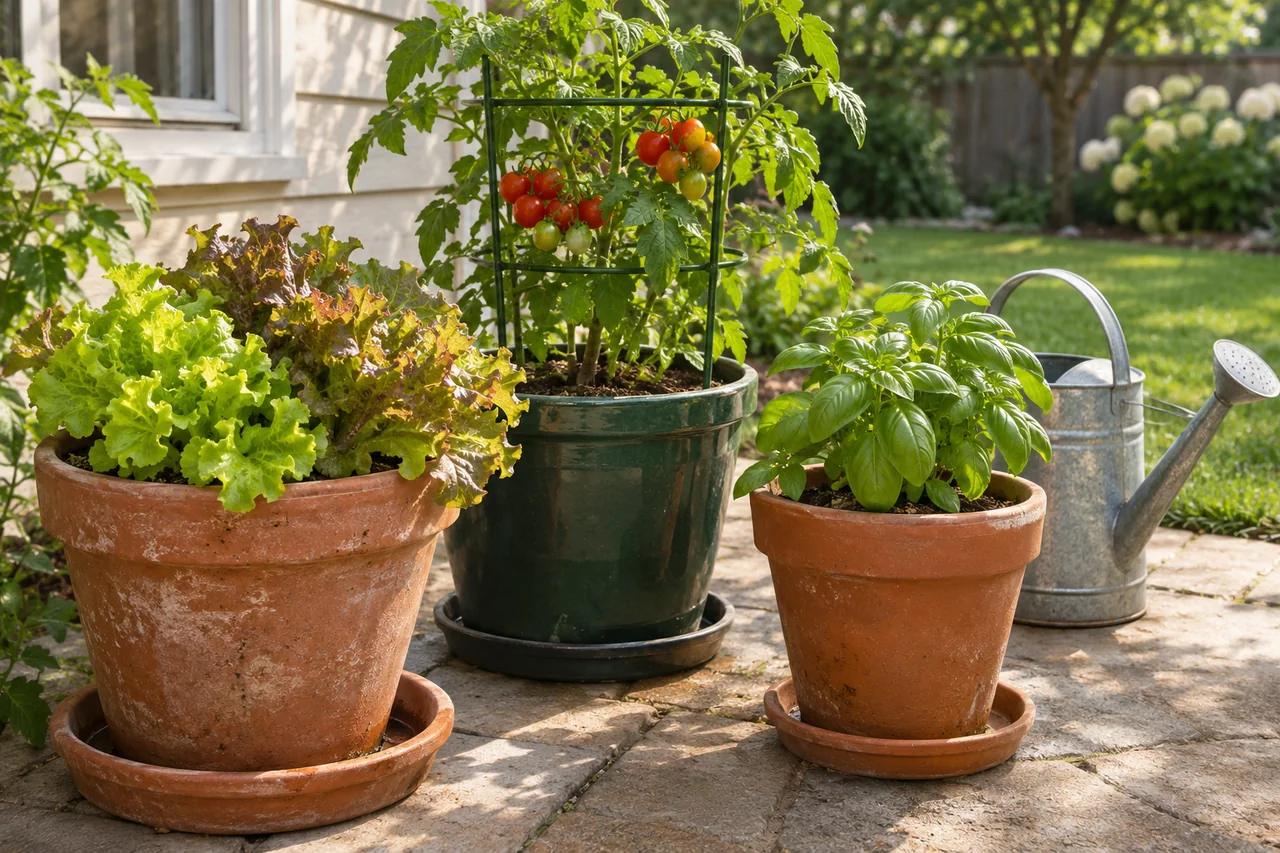
Observe your space before buying plants
Watch where the sun falls during the day and how close the spot is to water. University of Maryland Extension recommends about six to eight hours of direct sun for warm-season crops such as tomatoes and peppers, and three to five for crops such as lettuce and spinach. Match the crop to the space you actually have. Containers can need frequent watering in hot, dry weather. [1]
Choose one or two crops your household eats
Look for varieties suited to containers, including bush or dwarf forms where appropriate. Choose the planting date with advice from your local extension office; a good choice in one climate may be out of season in another. Begin with a few plants or containers, then keep notes on what grows and what you enjoy eating. The first useful result is learning a routine you can repeat. [1]
Match the container to the mature plant
Allow room for the full root system and make sure the container can drain. Check drainage before adding growing media. Extension notes that putting rocks or broken pot pieces in the bottom does not improve drainage. Plan where heavy, watered containers will remain and check any balcony or deck restrictions before placing them there. A pot that looks manageable while empty is a different object once filled and watered. [2]
Use a growing medium intended for containers
Container roots need both air and water. Maryland Extension describes commercial soilless mixes as suitable options and explains that ordinary garden soil can be too dense for containers. Read the mix and plant-care instructions, including the feeding recommendations. Keep water access in your plan rather than treating it as an afterthought. Ask your extension office about a problem you cannot identify before adding a treatment. [3]
Keep a simple growing log
Record the variety, planting date, watering routine, problems and what you harvest. Use that record to choose a small change for the next season. Keep a stored-food reserve while you learn; a new garden is not an immediate replacement for an emergency pantry. If you later want to preserve a harvest, begin with the safe canning learning guide and a tested recipe rather than improvising a preservation method.
Sources & further reading
Information reviewed November 10, 2026. Follow the linked primary sources for complete guidance and updates.
- Growing vegetables in containersUniversity of Maryland Extension
- Choosing containers for vegetablesUniversity of Maryland Extension
- Growing media for containersUniversity of Maryland Extension
Growing conditions and planting dates vary by location. Use local extension guidance, follow product labels and confirm that your chosen location can support the containers.